
Webinars
Free Flow – Restoring Rivers for better Fish Migration
May 28th, 2026
Online Webinar – Thursday, May 28
In celebration of World Fish Migration Day
9:00am – 11:00am - Pacific Daylight Time (PDT, GMT -7)
Join global river advocates for an online seminar hosted by Living Rivers Foundation, Rivers for Climate Coalition and the Water Working Group of the German Forum on Environment and Development celebrating World Fish Migration Day 2026.
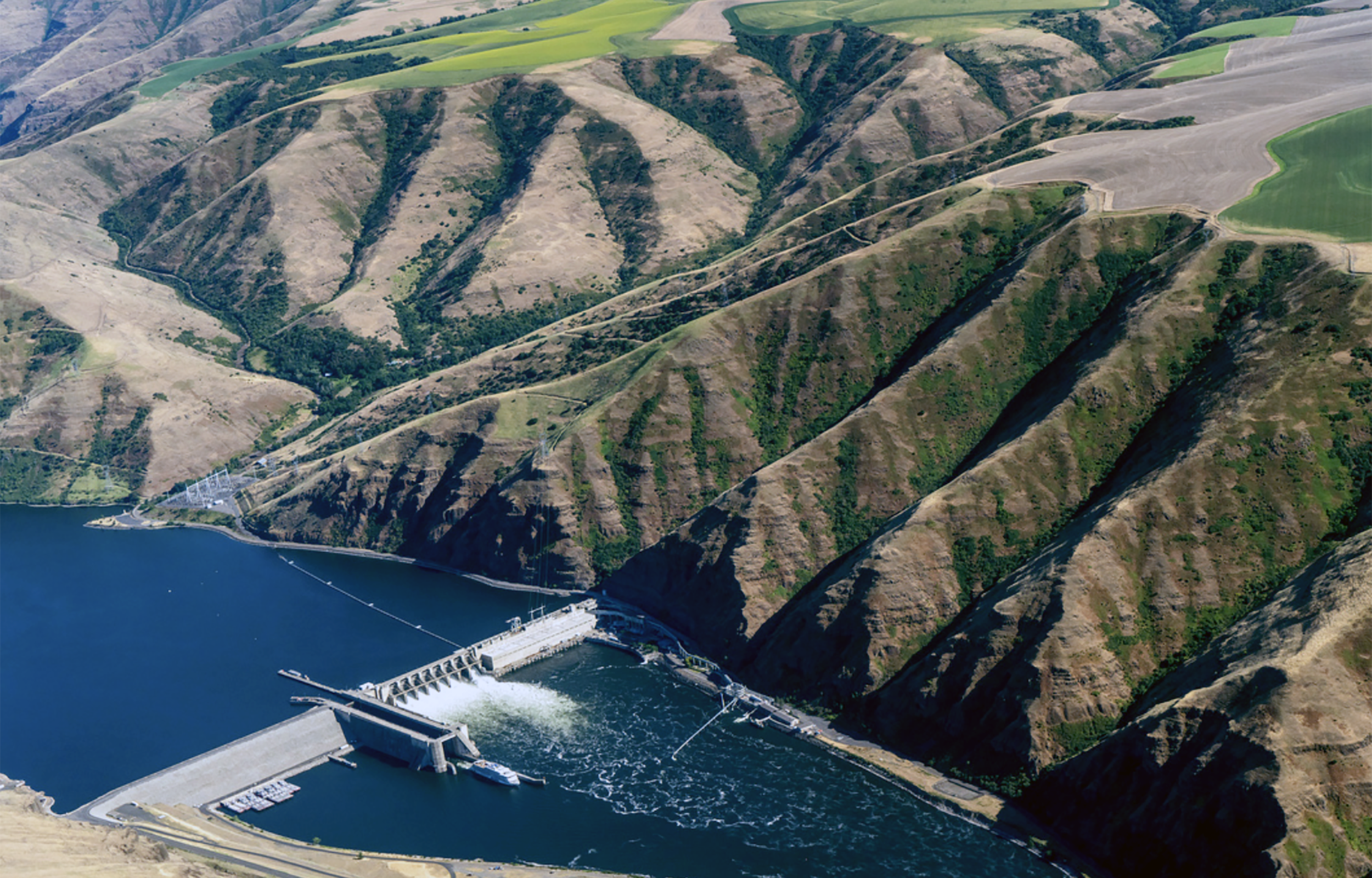
At this seminar, we will learn about two parallel efforts to restore rivers on two continents, half a world away. This includes efforts to remove four dams on the Lower Snake River in Washington State, USA which would restore salmon runs, water quality and natural flows there. We will also hear how the declaration of the Vjosa River in Albania as the first River National Park stands as a model for river protection at the same time many pristine rivers are facing uncertain futures in the name of hydropower development.
Presenters:
Kayeloni Scott, Executive Director, Columbia Snake River Campaign
Amelie Huber, Euronatur, Blue Heart of Europe – Balkan Rivers
Linnéa Jägrud, Störens återkomst – Sweden
Moderator: Michael Bender, Living Rivers Foundation
Are Arctic Dams Accelerating Polar Ice Melt?
Mar 26th, 2026
The Arctic is warming faster than any region on Earth. While fossil fuels remain the primary driver of climate change, emerging research suggests that large hydroelectric dams surrounding the Arctic may also be disrupting critical climate-regulating systems.
This webinar explores how dams alter river flows, trap nutrients essential for marine ecosystems, generate methane emissions, and potentially contribute to thermal and ecological changes that influence polar ice melt.
Join researchers Cliff Krolick and Ali Bin Shahid for a deep dive into the little-known connections between hydropower, ocean productivity, and Arctic climate systems, including analysis of 17 major dams encircling the Arctic.
Webinar Recording (English)
SPEAKERS
Ali Bin Shahid
Ali Bin Shahid is an independent Climate and Ecosystem Repair Architect based in Islamabad, and founder of PSKL Water for All. His work identifies locations where tight coupling between hydrology, forest systems, and atmospheric dynamics creates propagation paths, then maps the intervention points where targeted restoration can trigger recovery cascades rather than collapse.
With a background in systems engineering (mechatronics and control systems), Ali transitioned to farming and permaculture in 2012 and has since developed applied restoration frameworks across Pakistan, Spain, Colombia, Jordan, and the Arctic. His current research focuses on the atmospheric consequences of large-scale hydrological disruption, including the boundary layer modification work presented today.
Cliff Krolick
Cliff Krolick is a US-based researcher and educator focused on the environmental impacts of large dams and river regulation in northern ecosystems. He has spent the past three years conducting research and delivering educational presentations for the North American Megadam Resistance Alliance (NAMRA) and is a founding member of the North American River and Dams Alliance (NARDA).
His work builds upon the research of the late Hans Neu, former head of the Bedford Institute of Oceanography (1964–1984), as well as the investigative work of environmental researcher Stephen Kasprzak, author of Arctic Blue Deserts. Through his research and advocacy, Krolick examines how large-scale river regulation may influence marine ecosystems, ocean productivity, and global climate systems. He offers system wide thinking and perspective to ecological and climate issues.
What's the Methane Cost of DamS?
Feb 19th, 2026
What are the climate emissions from dams and reservoirs, whether for irrigation, hydropower, watering the grass and flushing the toilets at our homes, flood control, or all of the above? The more scientists examine this question, the more the data shows the emissions are very large. So large, in fact, that in many places hydroelectricity has the same or even greater climate emissions as energy produced from fossil fuel sources. Emissions from dams storing irrigation water can double the climate emissions from agriculture. In this presentation, Ecologist Mark Easter will describe the life cycle emissions from constructing, operating, and inevitably decommissioning reservoirs, with examples of emissions from the four Klamath River Dams decommissioned in 2024, the four Lower Snake River Dams, and Hoover and Glen Canyon Dams.
SPEAKER
Mark Easter is an ecologist and greenhouse gas accountant who has researched the carbon emissions from food, forestry, fiber and water in academia and private industry for nearly three decades. He spent much of his career working with farmers, ranchers, water managers, foresters and scientists around the world, researching how historical and modern agriculture contributed to the warming climate, and identifying both new and old farming and ranching methods that not only reduce the dangerous climate emissions behind our daily plates of food, but reverse those emissions wherever possible by drawing excess carbon dioxide from the atmosphere back into the Earth’s ecosystems.
Webinar Recording (English)
Webinar Recording (Spanish Interpretation)
UnDamming the Klamath: lessons for the nation and the world
Apr 17th, 2025
During this panel, we explore the history of the campaign for the removal of four of the Klamath River dams, the recently observed benefits of dam removal (as of October 2024), and lessons from the dam removal process that can be replicated in other parts of the United States and the World. During the webinar, we also give an update on our coalition's activities and ways to get involved in advocating for free-flowing rivers on an international policy level.
PANELISTS
Ashia Wilson (Klamath-Modoc Tribe) Community Engagement and Leadership Director at Ríos to Rivers, and Klamath River activist
Konrad Fisher Director of Water Climate Trust and expert on water allocation and climate mitigation policy. Konrad supported advocacy and litigation to UnDam the Klamath River.
Brook Thompson (Yurok & Karuk Native) UCSC Ph.D. Student, scientist, engineer, author, water activist, & artist.
Webinar Recording (English with English subtitles)
Webinar Recording (Ingles con sutitulos en español)