Rivers for Climate Coalition & Undam the UN Campaign
Rivers for Climate Coalition
Advancing Climate Justice Through Free-Flowing Rivers
undam the un Campaign
Urging the United Nations to stop recognizing dams as green energy
Rivers for Climate Coalition
-Advancing Climate Justice Through Free-Flowing Rivers-
The Rivers for Climate Coalition is advancing a coordinated global effort to reposition rivers at the center of climate solutions, and correct a critical flaw in climate finance: the continued support of large hydropower. Through our UnDam campaign, we are working across science, policy, narrative, and grassroots movements to ensure that climate investments protect ecosystems, respect rights, and deliver real emissions reductions.
-
Large hydropower is still widely promoted as clean energy. But the science and lived experiences of millions tell a different story.
Hydroelectric development has:
Released significant greenhouse gas emissions, including methane
Decimated freshwater biodiversity and fragmented rivers globally
Threatened food and water security for millions
Driven deforestation and ecosystem collapse
Displaced communities and violated human rights
Become increasingly unreliable under climate-driven droughts and floods
Yet, the International Energy Agency (IEA) has called for a major expansion of global hydropower capacity in order to reach net-zero emissions by 2050. With critical policy decisions underway within the United Nations Framework Convention on Climate Change, the next few years will determine whether rivers are protected or further exploited in the name of climate action.
We cannot afford to double down on a “solution” that undermines climate goals.
-
This is a decisive moment.
We are addressing a high-leverage gap in the global climate system:
Hydropower is still classified and financed as “clean energy”
Reservoir emissions (especially methane) are undercounted or excluded
River protection is largely absent from climate mitigation frameworks
These gaps create a critical misallocation of climate finance.
By shifting policy, science, narrative, and power, Rivers for Climate is working to unlock:
More accurate carbon accounting
Redirection of billions in climate finance away from destructive projects and toward real climate solutions
Scalable investment in river restoration and low-impact renewables
-
Healthy, free-flowing rivers are among the most effective, yet overlooked, climate solutions.
Restoring and protecting rivers can:
Sequester carbon and reduce emissions
Strengthen ecosystem resilience
Safeguard biodiversity
Improve water security
Support food systems and local economies
Dam removal and river restoration are scalable, science-backed climate strategies.
-
The Rivers for Climate Coalition is a growing network of partners working at the intersection of rivers, climate, and justice. Our mission is to safeguard the world’s rivers by advocating for international policies and financial mechanisms that prioritize ecological integrity, climate resilience, and community rights over the false solution of destructive hydropower.
We bring together:
Environmental and river advocacy organizations
Indigenous Nations and frontline communities
Scientists, researchers, and policy experts
Youth leaders and grassroots movements
Coalition partners include Ríos to Rivers, Waterkeeper Alliance, International Rivers, Counter Current, Water Climate Trust, Save California Salmon, the Center for Environmental Law & Policy, the North American Rivers and Dams Alliance, and Tell the Dam Truth, among a growing network of partners.
The role of free-flowing rivers as a climate solution is still too often overlooked in the spaces where global decisions are made, and advocacy for their protection, maintenance, and restoration remains limited. Rivers for Climate was founded in 2021 to help address this gap through the Rivers for Climate Declaration. Building on that foundation, we are now entering a renewed phase of work to re-energize and expand our coalition with greater coordination and urgency to ensure rivers are meaningfully represented in climate policy at this decisive moment. -
Get Involved
Sign our UnDam the UN Petition
We are demanding that governments, financial institutions, and international bodies:
Stop funding large hydropower as a climate solution
Recognize river protection and restoration as essential climate strategies
Ensure transparency and accountability in emissions reporting
Sign the Klamath River Accord
The removal of dams on the Klamath River marks the largest dam removal project in U.S. history and a global symbol of what's possible.
Driven by Tribal Nations and local communities, the Klamath River Accord represents decades of advocacy to restore salmon, ecosystems, and cultural lifeways.
This effort demonstrates that:
Dam removal can happen at scale
Restoration delivers measurable climate and ecological benefits
Indigenous leadership is essential to long-term success
Join the coalition as an assembly member
Partner with us
Support frontline leadership
Amplify the UnDam Campaign
-
Undam the UN Campaign
- A GLOBAL CAMPAIGN FOR FREE RIVERS -
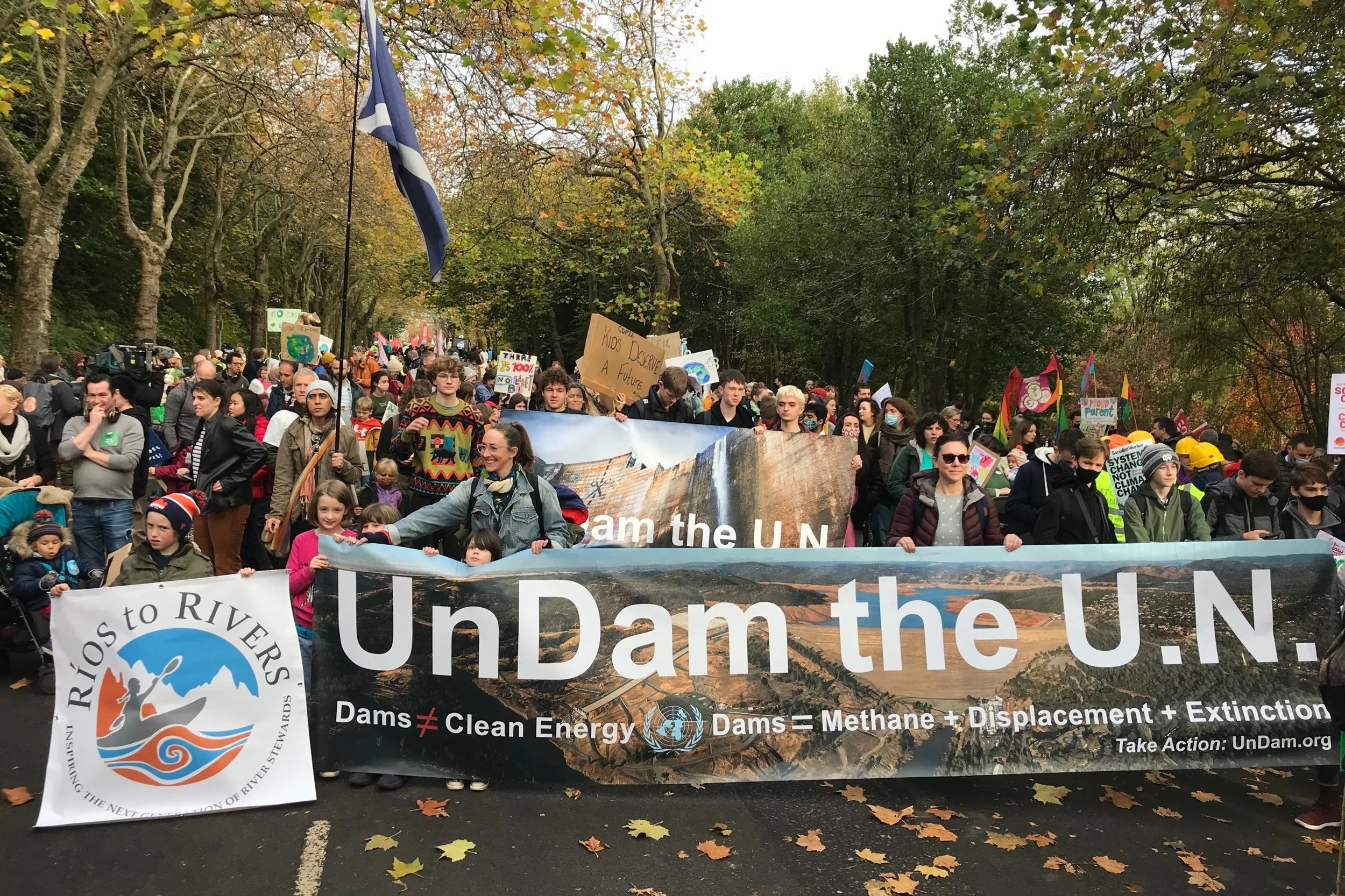
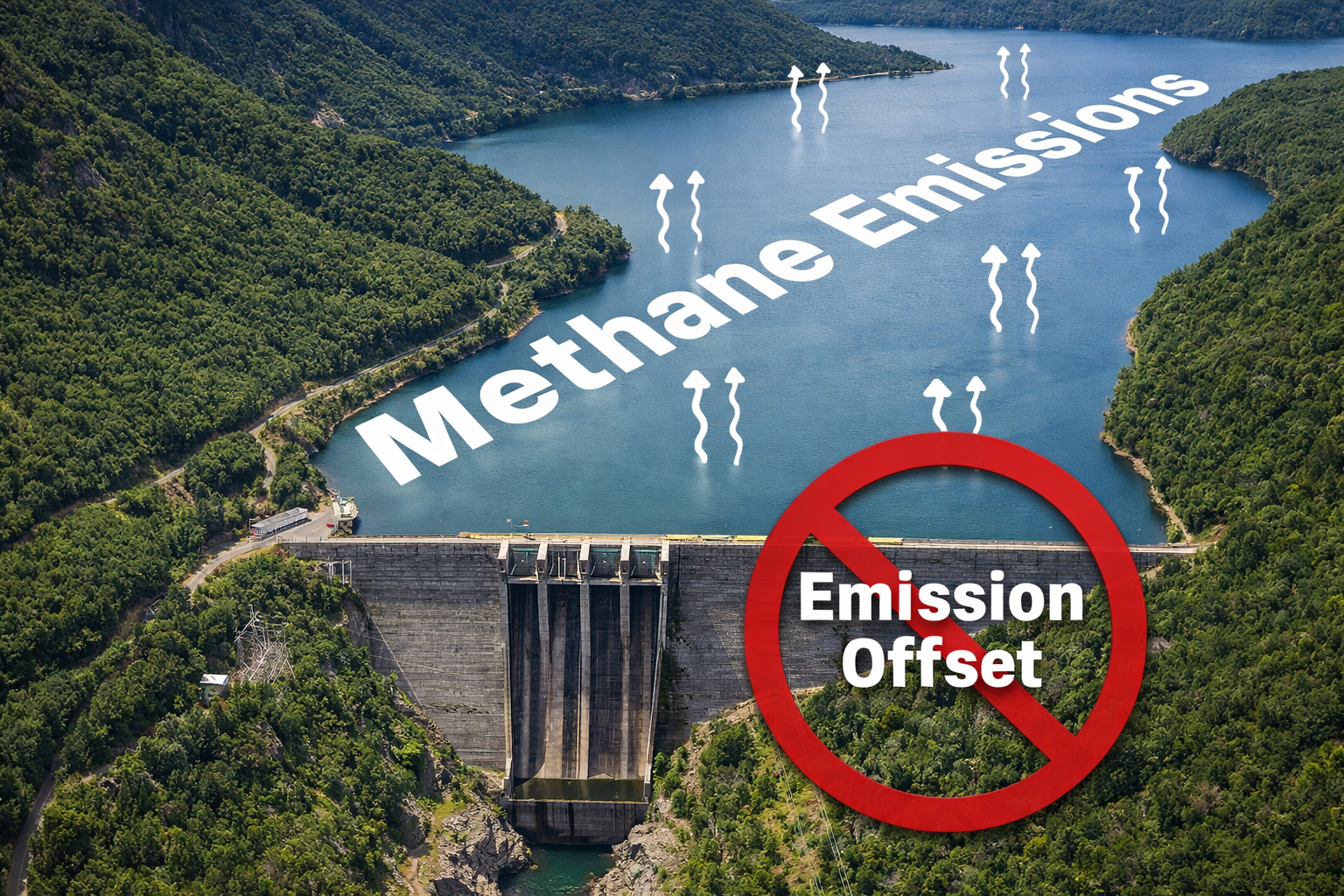
Tell the United Nations: Dams = methane emissions,
displaced communities & extinction.
Dams ≠ Carbon offsets or climate solutions
The UN has already approved more than 2,000 hydroelectric projects as carbon offsets. This is unacceptable. Sign now to tell the UN and member nations: Dams don't belong in the Paris Agreement.
Our Strategy: High-Leverage Systems Change
The UnDam Campaign is a coordinated global effort to shift climate policy, finance, and public narrative away from destructive dams and toward real solutions.
We focus on three interconnected levers for global impact:
-
Hydropower's climate impact has gone unaccounted for because the science has been incomplete, ignored, or excluded from decision-making. We are closing that gap by:
Advancing peer-reviewed research on reservoir greenhouse gas emissions, including methane
Partnering with scientists, technical experts, and IPCC inventory specialists to build credible, defensible carbon accounting methodologies
Submitting technical evidence and comments directly into UNFCCC methodology processes, including Article 6.4
Translating complex climate science for policymakers, funders, and the public
Impact Potential: A rigorous, evidence-based foundation that strengthens every other lever, and that industry and institutions cannot credibly dispute.
-
We engage directly with UN climate mechanisms, including Article 6 processes, to:
Remove hydropower from carbon markets and climate finance
Advance accurate GHG accounting for dams and reservoirs
Elevate river protection and restoration as a recognized climate solution
Submit evidence, policy briefs, and recommendations to UN climate bodies
Impact Potential: Shift international funding frameworks and national climate plans by redirecting funding away from harmful infrastructure and toward equitable, effective climate solutions.
-
We are reshaping the global narrative and correcting outdated assumptions about hydropower through:
Strategic communications and media
Documentary storytelling and media campaigns
Op-eds, press, and public education
Multilingual outreach and global movement building
Impact Potential: Influence decision-makers, funders, and multilateral institutions, and inform the general public.
-
We are strengthening a global coordinated river movement by:
Expanding the Rivers for Climate Coalition to synergize global actions
Supporting frontline Indigenous and youth leadership at global forums
Convening advocates around key policy moments
Building tools and networks for coordinated advocacy
Impact Potential: Durable, distributed pressure on decision-making systems, and frontline and Indigenous representation at decision-making spaces.
-
Hydropower expansion is accelerating, climate finance decisions are being made, and the world’s remaining intact rivers are at risk. But momentum is shifting.
From the Amazon to the Mekong to North America, communities are rising, science is bringing facts into focus, and solutions are within reach. We know what works. Now it has to be funded, protected, and scaled.
UPDATES
Bonn Climate Conference June, 2026 | The World Is Tearing Down Dams. The UN Climate System Is Still Rewarding Them.
Recorded Webinars